Showing posts with label Bella Books. Show all posts

Thursday, May 8, 2014

Last Salute by Tracey Richardson


THE RAINBOW READER WELCOMES SPECIAL GUEST REVIEWER

MARY ANNE FRETT 


LESBIAN FICTION ENTHUSIAST 
AND THE SOCIAL MEDIA ICON
BEHIND AUTHOR'S ETC. AND LEZCHAT


Book: Last Salute
Author: Tracey Richardson
Publisher: Bella Books

Viet Nam Soldiers Returning Home
by Larry Burrows
Sometimes you read a book that is set in the present but it throws you back into your past. Tracey Richardson’s Last Salute, a story that is centered on the death of a doctor in Afghanistan, made me return to the day I learned a co-worker had lost her fiancĂ© in the Viet Nam war. It also brought back memories of the burial of a friend, a recipient of the Silver Star during the Viet Nam War, in Arlington a few years ago.

Most striking about Last Salute is the way that both communities and the military treat the combatants of today, as opposed to the way combatants of that war some forty years ago were treated. The interactions of Army personnel and civilians in this book would not have happened quite the same way four decades ago, and the actions of the community that mourned and paid respect to their military dead would not have happened either. As hard as any death at any time is to comprehend and accept, in many ways Ms. Richardson has shown those of us who remember times past that things do indeed get better.

In Last Salute, Tracey Richardson shows us the devastation that the loss of Laura Wright, a doctor with the rank of Major serving in Afghanistan, has upon her younger sister and the girl she left behind when she went off to medical school and then joined the Army.

Dr. Pamela Wright is the younger sister who is left without her hero and her only family when Laura is killed. Already questioning her specialty in emergency medicine, and her place in a Chicago ER, Pamela is left adrift by the news of her siblings’s death. Pamela does manage to make one very important decision when she chooses to have services for Laura in their hometown of Ann Arbor. It is a decision that will alter her own future.

Trish Tomlinson, a teacher who never left her hometown of Ann Arbor, hears of Laura’s death and is shaken to her core as well. Laura was her first love, the girl she never quite got over. When Laura chose the Army over a life they could have shared, Trish was terribly hurt and was left in an emotional limbo. She had long since given up on the hope of Laura returning to her, but Laura’s death brings a finality that she has she was wholly unprepared for.

Reunited at the funeral parlor, Trish and Pamela cling to each other. They provide emotional support for each other, as well as that literal shoulder to cry on. Pam is reminded that Trish is the first big crush of her life, as well as the woman her sister was too foolish to stay with. Trish comes to see that Pam is more than Laura’s little sister, and has grown into a smart, talented, and attractive woman.

In the process of burying their shared loved one, the two women come to grips with the past and begin to search for a future where Laura exists only in the past as memory. That path is not an easy one, and leads the two women to take a trip into the war zone where Laura died. What they see and learn there gives each woman the closure needed to move forward.

Tracey Richardson has done a wonderful job of depicting the emotional turmoil of unfair loss, as well as the survivor guilt these two women struggle with as they gather the threads of their lives, and move on to a future without the woman who meant so much to both of them. While not all of us have felt the firsthand loss that war inflicts, we have all suffered the loss of someone we hold dear.  The emotions and events depicted in the book ring true, and make the reader stop and revisit old feelings of loss, anger, and sorrow.

Last Salute is a marvelous story that gives readers an insight into so many of the men and women who serve in our all volunteer armed forces, as well as a view into the emotions of family and friends when a loved one is wounded or killed in action.  As a reader, I liked the way the story provided a glimpse into how the comrades of the fallen are given a chance to honor and mourn, and I was even happier to see how the military has become solicitous of the families of those who are lost. 

For those of us who remember Viet Nam, it is affirming to know that those who serve our country today are treated with greater respect and dignity than their parents and grandparents were years ago.

Author
Tracey Richardson
The romance in the story works so well because the author takes the time to let it grow. These women are dealing with both personal and professional issues when they come together to mourn. They come to terms with not only their loss, but their burgeoning feelings towards each other a bit reluctantly, yet in a way that is natural and believable. One of the things I liked most about this book was the way Ms. Richardson allowed the feelings and the emotions between Trish and Pamela to build organically.   
 
If you’re looking for a romance that takes its time, allows you to get to know the women involved, and gives you a chance to understand the emotions and the events that drive them, then I highly recommend Last Salute. Tracey Richardson has done a wonderful job telling this story, and showing us that once in a while our past may hold a path to our future.  Last Salute is a finalist in the Lesbian Romance category for the Lambda Literary Foundation’s 26th annual awards.


Wednesday, July 11, 2012

Rhapsody by KG MacGregor


Book:  Rhapsody
Author:  KG MacGregor
Publisher:  Bella Books

While often dismissed by the tony hair salons under the bright lights of the big cities, the Midwestern is a fringe hairstyle sported by sensible women in sweater sets and comfortable shoes all across the Corn Belt. It generally incorporates a range of style tricks from a decade or two earlier, including angled overgrown sideburns in front of the ears, a spiky top with shorter sides, and the ubiquitous color, perm, cut, and comb out. 

On the most rare of occasions, it evokes that wonderful example of onomatopoeia, “shellac.”

All this and a latte too!
My mom has a Midwestern and has gone to the Fresh As A Daisy Hair Salon to have her hair set every Thursday morning for the better part of thirty years.  The Fresh As A Daisy is a one-stop shop—you can get your hair and nails done, tan, discuss state and local politics, pay your water bill, and order a venti, non-fat, no foam, no water, 6 pump, extra hot, chai tea latte to go.

Some of the biggest hair of my life came courtesy of Mary at the Fresh As A Daisy Hair Salon. 

Mind you, it was the halcyon days of the 80s, and big hair was the height of fashion, even for twitchy little dykes.  Of course, back in those days, Nancy Reagan was President [sic], Murder, She Wrote, Matlock, and Golden Girls were the top shows on television, and the little known 8888 Uprising made what would soon be known as the Tiananmen Square Massacre look like child’s play.

But I digress; we were talking about hair.

I, personally, discovered the Fresh As A Daisy as a traumatized teenager­­. By that time, my older cousin, Glenda Sue, had graduated from cosmetology school and was using me as her personal crash test dummy. Since my freshman year of high school, I had suffered through a storied range of hair disasters that included, among others, a botched color job that rendered my hair a lovely shade of pond water gray, an epic failure of a haircut that Jaromir Jagr adopted as his very own a mere decade later, and a haunting perm that was eerily reminiscent of the one Phil Spector sported at his murder trial. 

Suffice it to say, finding a hairdresser who understood the unique elements of my husky hair changed my life for the better—draw your own conclusions below.

My big Fresh As A Daisy hair
In KG MacGregor’s newest release, Rhapsody, TV4 anchorwoman Ashley Giraud has worked hard to become Tampa’s most beloved and recognizable personality.  She’s smart, beautiful, and has an easy style that makes coworkers and viewers trust and adore her.  But, beneath the public persona, Ashley fights a brutal battle against a raging torrent of demons.  When she finds herself in need of a new stylist, her coworker Robin suggests Rhapsody, a small salon owned by Julia Whitethorn.  Julia and Ashley strike up an easy but arm's length camaraderie, until slowly Ashley allows herself to open up to invitations from Julia and her eclectic group of friends.  

While Ashley begins to appreciate the way her new world is opening up, she continues to hide her secrets and fight her torments, taking one step back to every two steps forward.  It doesn’t take long for Julia and Ashley to admit feelings and a growing sexual attraction to one another.  But despite Ashley’s best efforts to purge her demons, and Julia’s best efforts to understand and support the woman she loves, there is no quick fix for either.  When the story of her career breaks on the one day she’s out of town, what’s left of Ashley’s world begins to crumble at an accelerated pace.   There’s no doubt that Ashley and Julia love each other, but is that love big enough and strong enough to withstand the rest of their journey?

KG MacGregor’s Rhapsody is a well-written story populated by keenly-developed characters.  The tempo is apropos to the story, at times lento, presto, or allegro, and the bits of wit and drama are balanced and timely.  The relationship between Julia and Ashley is believable, and the pacing of their attraction adds credibility to their actions.  The supporting cast of characters is multi-dimensional, and they each add depth and value to the greater story. 

Ms. MacGregor skillfully writes Ashley Giraud such that the reader develops a peculiar para-social relationship with the character—much like the anchorwoman’s daily viewers. In fact, we know little more than the public aspects of the anchorwoman's life without Julia as a conduit.  Likewise, Julia’s character is kind to a fault, and pays attention to the world around her, yet Ms. MacGregor nimbly and quietly slips her into patterns of romantic relationships where her needs are only partially met.

The novel is a heady mix of literary contradictions—at turns edgy and austere, then sweet and playful. While it is a classic love story, it’s not another run-of-the-mill romance.  In truth, Rhapsody is the fractured fairytale of two women falling in love, and emerging stronger for it. And, while there is the requisite “happy ending,” it’s a happy ending with a caveat: Ashley hasn’t vanquished the bĂȘte noire from the depths of her soul, and Julia may never have all of her needs met by the woman she loves.

During last year's GCLS Keynote Address, Ms. MacGregor pointedly challenged writers to address dark themes such as rape, incest, exploitation, manipulation, and violence because these sadly are as much a part of our lesbian community as romance and first love. In this novel, KG MacGregor has managed to walk the talk—Rhapsody is a story that stays with you long after you close the book, not so much because of the sweet romance or the enviable friendships, but because of the specter of darkness that lingers.

I’m giving Rhapsody a solid 5.2 out of 6.0 on the Rainbow Scale for all that, and a good read to boot.

Monday, June 11, 2012

Everything Pales in Comparison by Rebecca Swartz


Book:  Everything Pales in Comparison
Author:  Rebecca Swartz
Publisher:  Bella Books


June is Pride Month, the High Holiday for all of modern queer culture.  

For lesbians, one of the most empowering aspects of Pride is the annual Dyke March, which was first organized in 1993 by the Lesbian Avengers as a protest during the March on Washington. Today, Dyke Marches are held in more than a dozen U.S, cities, as well as a growing list of cities all over the world. And, while I lived in Washington, D.C. for more than twenty years, pound for pound, the best Dyke March going takes place in New York City. 

It’s large, it’s loud, and it’s the only Dyke March featuring the Nudist Socialist Lesbians.

Back in the mid-nineties, I routinely made the sojourn to NYC for Pride Weekend.  One of my closest friends is a New Jersey Filipina named Becky. She always offered a place for me to stay, insisted that I join her parents for homemade Laing, and required me to join Kilawin Kolektibo in the Dyke March. 

If your Tagalog is a bit rusty, Kilawin Kolektibo is loosely translated as “Hot and Spicy Pinay Collective.” 

The year was 1995, and as tens of thousands of lesbians rallied in front of the New York Public Library before the start of the march, the conversation amongst my Kilawin counterparts centered on who, among the throngs of dykes surrounding us, was most compelling to each of us. 

I know, I’m sorry, but when 20,000 lesbians surround you, the inner pig in all of us comes rolling out in all her twitchy glory.

It was a moveable feast of women in all colors, shapes, and sizes. There were stone butches, soft butches, and femmes. Bois, baby dykes, tomboys, and girls-next-door.  There were even plenty of twitchy little dykes just like me.  It was a veritable cornucopia of all things lesbian.  So, when it was finally my turn to pick, I pointed towards a tall, athletic blonde, ably filling out a tight pink t-shirt and shorts, striped knee socks, and wearing roller skates.  

As an aside, I’m not normally the kind of girl to go for either hot pink or roller skates, but for this celestial creature, I easily and gladly made the exception.

Several members of my group playfully encouraged me to go over and introduce myself, and one even offered to walk over and do it for me.  I was just about convinced to screw my courage to the sticking place, when my dream girl turned around and smiled brightly at me—high cheekbones, Carolina blue eyes, an aquiline nose, and a full platinum blonde mustache.

[insert record scratch]

Full mustache?

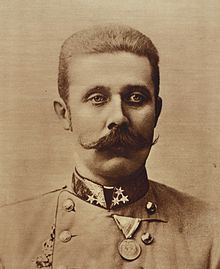
Not just a full mustache, but a handlebar mustache, the kind with curly waxed tips—rendering her more than a tad reminiscent of Franz Ferdinand, Archduke of Austria-Este.

Everything Pales in Comparison, the debut novel by author Rebecca Swartz tells the story of two women with more in common than they realize.  Constable Emma Kirby, working security at a concert featuring an up-and-coming country singer swings into motion when a bomb explodes on stage, gravely injuring singer/songwriter Daina Buchanan.  Her instincts and quick actions save the life of the singer, and make her a reluctant hero.  After awakening from a coma, Daina’s mother sets up a visit between the two women, so her daughter can say ‘thank you’ in person.  Sparks fly, but neither woman considers the other a viable option for romance.

A few days later, Emma, returning home from work, finds a note threatening both her life and the life of Daina.  In no time, Winnipeg’s finest springs into action to protect both women and find the Unsub.  Since there are no clues as to the Unsub’s identity, both women are reluctantly placed into a safe house, with Emma acting a dual role as threatened party and Daina’s bodyguard.

Almost immediately, the walls between the two women begin to crumble, and they grow closer together.  Neither is looking for a relationship, and both try hard to avoid it.  But, the attraction is too much, and just as they begin to weigh some sort of a future together, all hell breaks loose as the rapidly decompensating Unsub moves in for the kill.

Everything Pales in Comparison is a well-written and edgy page-turner that features a compelling fusion of romance and thriller. The pacing is brisk and the main characters are equal parts strong and vulnerable.  The writing is clean and crisp, sometimes surprising with a well-timed turn-of-phrase or an unexpected change in perspective; and the dialogue joyously sidesteps hackneyed clichĂ©s and dime store dramatics.

If anything though, Everything Pales in Comparison is a book sporting an identity crisis. While it is rightly a compelling fusion of romance and thriller, it suffers in that it is both and neither. 

The romance between Emma and Daina is immediate, but not fast or certain, and the characters must both stare down demons and make extraordinary leaps of faith to trust one another. It is both believable and satisfying that they fall in love. However, the sweetest aspects of the romance are often lost among the gritty elements of the thriller

Likewise, the thriller within this novel speaks volumes to suspense, tension, anticipation, ultra-heightened expectation, uncertainty, and surprise—it even features literary devices like the red herring and plot twist.  However, much like the case above, the very best aspects of the thriller are often lost among the softer elements of the romance.

Still, Everything Pales in Comparison is a rock-solid debut, and Rebecca Swartz is a strong, talented writer with a long future in Lesfic ahead.  This story offers believable characters, an exciting plot, robust dialogue, and a petal-to-the-metal ending that will leave the reader breathless.  I’m giving it a 4.8 out of 6.0 on the Rainbow Scale.


Monday, January 2, 2012

Open Water by Pol Robinson


Book:  Open Water
Author:  Pol Robinson
Publisher:  Bella Books

Welcome to The Rainbow Reader 2012!

It’s no secret; I love sports and books about sports – especially books about lesbians and sports.

One of the very best parts of any even numbered year is that we get to watch the Olympics.  This year, the very best athletes in the world will travel to London to take part in the most anticipated sports competition known to mankind, the XXX Olympiad. 

The Summer Olympics offers sports fans and casual observers the opportunity to witness competition in a wide array of sports that rarely grace the advertisement happy medium of broadcast television.  We finally get the opportunity to spend untold minutes choosing previously unknown favorites in events like Ping Pong, Handball, Match Racing, Dressage, Saber, Archery, Race Walking, Water Polo, and Rowing.

Let’s face it, The Powers That Be at the Network give us hours upon hours of money events like sprinting, swimming, and Men’s Basketball, but secretly every one of us wants to watch at least one Steeplechase.

Be that as it may, the beauty of the Olympics is that we are granted two weeks every four years to broaden our summer and/or winter sports horizons, and catch a brief glimpse of these events and athletes that never have the opportunity to capture our attention.

Now, every sport has it’s own language – boot, bowball, button, gate, gunwale, keel, loom, Macon blade, rib, rigger, scull, skeg, and my personal favorite, cox box – all describe various aspects, elements, and pieces of rowing equipment.

And then, who can forget “repechage”, perhaps the sexiest word in the lexicon of all sports.

Pol Robinson takes readers back to Beijing and the Summer Olympics of 2008 in her debut novel, Open Water. Cass Flynn took up rowing later in her collegiate life, and was at the top of her sport when a pizza delivery boy ran a light and almost ended her rowing career.  But she was determined to come back, and her hard work and dedication to the sport landed her a last minute spot on the US Olympic Team.  Upon arriving in Beijing, she meets Laura Kelley, Captain of the U.S. squad and stroke of the eight-boat.  Laura is strong, smart, and beautiful, but she is fighting emotional demons that leave her edgy and sullen.  However, the two have an immediate attraction, that both initially try to suppress.  After a rocky start, both women agree to restart their relationship, and slowly begin to build from there. Of course, Laura has a tendency to let herself get closer to Cass, and then back away with no explanation. 

This push and pull continues as Laura’s sinister and angry ex, Shelly, steps into the picture and tries every angle to hurt both Laura and Cass.  Finally both women admit an attraction, but Laura has pushed Cass away too many times.  Still, Laura cares enough about Cass to change her ways, and work her way toward love once and for all.

One of the downfalls of most sport fiction is that the sport is overwhelmed by the story surrounding it.  For instance, we know more about the speed skater’s broken heart in high school than we do about her split times in the 1,500-meter race or her technique in the final lap against the reining World Champion.  

One of the joys of Open Water is that Ms. Robinson skillfully brings the reader into the heads of the women rowing, and into the teammates and coaches watching.  The reader gets an appreciation for the grueling nature of the sport, and the skill and precision needed to reach such an elite level.  She simply yet expertly describes the equipment, the anxiety, the determination, and the exhaustion.

Not to mention the chunky air quality of downtown Beijing.

A recurring complaint is that a significant number of lesbian novels rely on the overused literary convention of “love at first sight”.

And, as a reviewer, I always get a little twitchy when I sense it happening. 

Ms. Robinson firmly inserted this convention into Open Water, but she doesn’t allow her characters to fall victim to it.  Cass and Laura do have a moment in the Beijing airport where their eyes meet, but the characters are crafted in such a way that neither of them can accept that feeling at the moment.  Cass has to figure out what it means to be in love, and Laura has to learn to forgive herself for something that wasn’t really her fault in the first place.  This pacing allows the reader to get a better feeling for the process of the characters struggling within themselves, while trying to open up to something neither saw coming.

My only significant criticism of Open Water is that I really didn’t develop a deeper appreciation for Laura, who was a de facto main character as Cass’ love interest.  Cass mainly narrates the book, and we have guest narration by her roommate and the Coach, but very little access to Laura’s point of view.  We see her struggles and her emotional acceptance and growth at arms length.  As the book moves past the push and pull events into the ultimate ‘will they/won’t they’ aspect of the relationship, Laura’s decisions and growth are made off page, and the reader really only knows what Cass is told by Laura. 

Cass is taking a lot on faith, but then again, haven’t we all?

Still, Open Water is a fast and fun read, you do care about the characters and the outcome of the races, and you want the Big Bad to get her comeuppance.  Pol Robinson’s debut is a solid book that will surely get each and every reader into the Olympic spirit, and make us pay a little more attention to the fascinating sport of rowing.  

I’m giving this spunky little debut 4.7 out of 6 on the Rainbow Scale, and looking forward to Pol Robinson’s next major event.

Wednesday, October 5, 2011

The Wedding Party by Tracey Richardson

Book:  The Wedding Party
Author:  Tracey Richardson
Publisher: Bella Books

Any time two people make the lip-smacking, life-affirming decision to forge forward and formally unite into one all-encompassing matrimonial unit henceforth known as ‘us’, the Cosmic Comediennes begin to dance gaily, open their bedazzled bags of entropic chaos, and wantonly sprinkle handfuls of magic faerie mayhem upon each and every person, thing, and weather system involved. 

Seriously, make a quick checklist of every wedding you been to or taken part in: 

  • A pesky and persistent low-pressure system parks itself directly over the tent of your long-planned outdoor wedding.
  • The stoner that delivers the flowers gets the noon wedding confused with the 1 o’clock funeral across town, and the bride has to carry a hastily redesigned "So Long Uncle Morty” bouquet.
  • The adorable twin 4 year-old flower girls share an entire bag of Skittles for breakfast, and then barf a glorious double rainbow on the minister’s white patent leather loafers. 
  • The caterer is arrested by the ATF for using homemade Sterno in his chafing dishes just about the time the happy couple utters ‘I do’. 

And, yes, I have been witness to these very examples.

Weddings never go off as planned.  Ever.  It has nothing to do with love, commitment, planning, or the naughty officer that shows up at the bachelorette party with furry handcuffs.   No, it has everything to do with good, old-fashioned Fate.

The Wedding Party by Tracey Richardson proves, once again, that the Wedding Fates are cheeky little bitches.  Dani and Shannon have a special love, and they’ve decided to formalize their relationship.  The perfect wedding is planned, and the happy couple is taking their best friends Jordan and Claire, and Shannon’s niece Amanda to Las Vegas to bond, have some fun, and prepare for the wedding to end all weddings. 

Ah, but the Fates have been busy, and everything starts to list wildly out of control before any of their bags are even packed. 

Dani lost her high paying job weeks ago, and hasn’t told her bride-to-be; Shannon is scared to tell Dani that she’s infertile and can’t give her the baby she desperately wants; Jordan’s playgirl days suddenly catch up to her in humiliating fashion; Claire is unwilling to move past the painful loss of her longtime partner; and, little Amanda is all grown up, but working her way out of an impulsive, ill-advised decision.

It seems like everyone is hiding a little somethin’ somethin’ . . .

We’re all familiar with the old adage “What happens in Vegas, stays in Vegas,” and I’m sure there are plenty of tattoos out there to prove it.  However, The Wedding Party shows us that what happens in Chicago, bitch slaps everyone equally in Las Vegas.

Dani and Shannon both struggle mightily over going into the wedding with devastating secrets stuffed in every pocket.  But, why ruin the day for the other by telling the truth?  Claire, whose libido has been pretty much moth balled since her partner’s death, suddenly finds that young Amanda has the power to turn on a cascading waterfall of tingles deep inside her not-so-withered places.  Sweet little Amanda has an older soul than her physical age suggests, and she falls hopelessly in love with her Aunt’s butchy best friend at first sight.  And Jordan, who has left a lifelong trail of broken but sexually satisfied hearts is gobsmacked when she realizes she’s fallen head over heals for a Jazz singing angel with a painfully similar past. 

On the upside, everyone drinks way too much and one way or the other has lots of mind-blowing sex.

And, since Tracey Richardson is a romance writer’s romance writer, the femmes buy shoes, have massages, and confess almost everything to each other over their pedicures.  But, the studly butches smoke cigars, gamble, and find innovative ways to not have heart-to-heart talks while having heart-to-heart talks.

In my last two reviews, I’ve been on a soapbox about how authors and publishers need to push themselves into new directions.  Of course, I also said that sometimes a reader just needs what feels familiar.  Over the last few years, I’ve read a handful of Tracey Richardson’s books, and it’s crystal clear that she has a homing device for the familiar.  And, by ‘familiar’, I mean she writes beautiful, well-formed characters and strong, clever plots that are sprinkled with liberal does of angst and redemption.  We read them because they take us to a place we want to be.

And like those other books, there are so many delightful elements to The Wedding Party.

From the first time we’re introduced to them, the women of The Wedding Party come to life, and we are invested – hook, line, and sinker.  Each of characters makes a painful personal sacrifice in the name of love, but the love goes beyond the expected romance and touches on platonic and familial love.   There are myriad relationships in the story – some old, some new, and some redefined.  Each is different, but equal - sometimes romantic, sometimes confusing, and sometimes, even, borderline pejorative.   It all combines into a well-conceived, well-balanced, and well-written tale of love, trust, and risking everything.

I truly appreciate the way Ms. Richardson constructs the flash flood of angst and libidos by showing each character’s perspective through chapters dedicated to their experiences.  For instance, the first chapter is Dani, the second is Claire, the third is Shannon, the fourth is Jordan, the fifth is Amanda, and the sixth is back to Dani.  This continues on, so that our time with each of the main characters and their journey is balanced and complete. A brilliant approach to managing five women and three romances.

As a reader, one of the most consistent complaints I have is that an author plops too many characters into a story.  In The Wedding Party, we have five main female characters, two important secondary characters, and a smattering of unimportant one-scene wonders.  The probability of things getting confusing quickly was certainly high, but I must commend Ms. Richardson for wrangling the potential mayhem with supreme skill and panache.  Each of her characters has a unique voice and personality, and I never once had to flip back a few pages or chapters to remind myself who was speaking.

If I have one complaint with the storyline, it’s that I don’t feel we really had enough time with Jordan and Dez to fully appreciate what they saw and felt with each other, and how powerful it was for both of them when they were together.  I’ll admit that my natural cynicism towards love at first sight is probably more at fault than anything the author did or didn’t do, but in the end, I needed a bit more emotional connection from these two women.

Tracey Richardson is a stellar, engaging writer and The Wedding Party is another solid, well-written winner for my bookshelf.  I’m giving it a 5.0 out of 6 on the Rainbow Scale – I’d originally considered giving it a 4.9, but the lady reading Ecclesiastes in the airplane seat next to me choked on a honey-roasted peanut when Dez took Jordan, in very graphic style, in the hallway. 

That right there, my friends, is a case for extra credit.

Heh, heh, heh . . .  


Wednesday, July 20, 2011

Beautiful Game by Kate Christie

Book:  Beautiful Game
Author:  Kate Christie
Publisher:  Bella Books

As a reviewer, books find their way into my blog via a scattershot approach- sometimes, I wander through my personal e-book shelves and pull out a story that seems to be calling to me in a somewhat breathy, seductive voice. 

Hey baby, wanna do me again?  I’ll make it worth your while . . . .

Ahem.  (cough, cough)  

Sometimes, authors ask me to review their book, so I do my best to oblige them. 

Why thank you, I’d be delighted to read your book and give it the full treatment . . . .

Other times, I browse the e-book shelves of any number of publishers looking for a new author with a strong voice or an established author with something new to say.

Ooh!  Ooh!  This one looks good . . . .

And, very occasionally, a book finds its way into the blog because I buy it, not to review and share, but as a simple, guilty pleasure for me and me alone.

Mineminemineminemineminemine . . . .

And that’s how this review came to be.  I bought Kate Christie’s Beautiful Game because it sounded fun, and I’m in a post Women’s World Cup soccer frenzy.  This one was supposed to be just for me.

But then it had to go and be fantastic, make me warm and happy inside, and refuse to let me go until I had finished the last sentence and hugged my Kindle to my chest with all the strength in my little blogging body.

Beautiful Game follows a year in the life of Cam Wallace, a soccer player on a partial scholarship at San Diego University.  She’s an out and proud athlete, and loving life as a gay co-ed. However, a chance meeting with the chronically unfriendly school tennis phenom, Jess Maxwell, begins an unexpected yet tentative friendship.  Of course, Jess surprises Cam time and again by reaching out.  This is fine with Cam, she has a definite crush on Jess and her long, strong legs, but reads her signals clearly – close, but only so close.  Their friendship slowly deepens, and on a few occasions appears to skirt the edge of mutual attraction.  But, it can only get so far.  Jess doesn’t share much of her past with Cam, and Cam senses something powerful is lurking just outside her reach.  But, Cam finally has to admit that she’s in love with Jess, and the push and pull can’t go on forever.  At last she confronts Jess with the truth, and comes face-to-face with the secrets and the strengths behind all the walls. 

So many things made Beautiful Game a satisfying book.

Patience is a virtue, and I love the pace and the patience of the story, not just between the two main characters, but also by the author not to rush the story.  Cam is a patient woman, and Jess needs patience – by allowing the trust to grow slowly and steadily through the book, the relationship feels honest and real.  And, the push and pull Jess exhibits also feels real – two steps forward, one step back, one step forward, and one step to the left. 

I also appreciate that Cam is more than a gay athlete lusting after another gay athlete.  She has friends, some she genuinely likes and some she merely tolerates.  She actually practices and plays a sport, and feels angry and hurt when people are disrespectful.  She studies, goes to classes, and writes papers.  She has a summer job in another state, and she drives a beater Tercel.  She has a soccer tan.  And, in spite of the reputation as a playgirl that everyone wants her to have, she is respectful of boundaries.  In other words, she is a fully developed character - as a reader you really get to know her, and thus appreciate the journey you share with her.

How utterly refreshing!

I also have to say that I like how I didn’t guess why Jess is the way she is.  I suspect, other readers will figure it out long before I did, but for me it was unexpected.  That makes the showdown (for lack of a better term) between Cam and Jess more powerful and moving.  It also provides a brilliant moment where we learn how strong Jess is, and how far she’s come just to get to this conversation with Cam.

Beautiful Game is a complete story from start-to-finish - no overused plot devices, no convenient characters, and nothing left undone. 

And the girl gets the girl, which always makes my squishy, romantic little heart go pitapat.

I don’t know why some books make a bigger impression than others; I just know that they do.  It could be sunspots, a sudden change in my fiber to protein ratio, or a surge of this hormone or that.  To me, Beautiful Game is a beautiful story.  

I really did hug my Kindle lustily when I finished it.

This one is just too good to keep to myself.  That's why I’m giving this spirited little book a 5.1 out of 6 on the Rainbow Scale, and making a note to pick up Kate Chrisite’s first two books the next time I whip out the ol' plastic. 

Friday, June 10, 2011

Shadow Point by Amy Briant

Book:  Shadow Point
Author:  Amy Briant
Publisher:  Bella Books

I don’t care who you are or how many books you may or may not have written, if you can find a way to smoothly slide the tantalizing little phrase “enthusiastically going down on me on the living room floor” into the first six pages of your story, I guaran-damn-tee that will you have my undivided attention for the duration. 

Mission (and a few other things) accomplished.

Shadow Point is a feisty little romantic paranormal thriller by first time novelist, Amy Briant.  In the story, we meet Madison McPeake, a burned-out corporate road warrior seriously in need of a metaphysical adjustment.  Unfortunately, she gets just that and more when she’s all but fired from her job, finds out that her only brother is dead, and realizes she’ll suddenly be responsible for a five-year old she’s never even met.  Like any responsible Next of Kin, she ties one on, buys a Dr. Spock book, and boards a plane to San Diego, where her brother was living in a tiny cabin in a remote section of a Navy base.  Once there, she meets the lovely next-door neighbor (with her truly lovely behind), Dr. Alice Piper (Pipe), and her surprisingly well-adjusted niece, Katiekins.

Why do I have the suspicion that if I was the one on that beach that evening, the next-door neighbor would have had a five o’clock shadow, a hairy ass, and man boobs?

Almost as soon as Madison arrives at the cabin, the action starts.  There are bad dreams, spooky encounters, strange sensations, and some good old-fashioned flirting, kissing, and fondling.  We meet a handful of unorthodox characters, see Madison really fight to make herself a better person for the kid, and learn that there is definitely more to Shadow Point than meets the eye.  Madison, Katie, and Pipe quickly form a strong bond, team up with an English Bulldog with a questionable taste in chew toys, and take on the malevolent, smelly, and downright creepy spirit.

It’s been a long time since I’ve read a good ghost story.  And, suffice to say, my wait ended with this book.   Ms. Briant was able to draw a landscape that was both beautiful and eerie; a lead character that managed to be pitiable, funny, and lovable; evolving relationships that while new and untested were credible; and a Big Bad that made the reader just about as skeeved-out as the characters.

Madison McPeake is truly brilliant.  Her thoughts, actions, rationalizations, and internal dialogue were pure comedic poetry, even in the darkest part of the story.  I loved the sad box of animal crackers, and her irrational protection of her Niners cap from the five-year old.  Likewise, Katie is wise beyond her years, but still threw tantrums when it came time for a bath.  Pipe, simply put, is every girl’s hot dream scientist.

And lest we forget, she has that truly lovely behind . . . and a few other decidedly unscientific parts.

Overall, this is a great book that scores high points in humor, mystery, and creepiness.  I’m not really so sure, though, why such a big deal was made early on of the Church of the Benevolent Fount – the whole fundamentalist thing seemed to be nothing more than a way to inject suspicion and drama into the brother’s death and Katie’s placement. Don’t get me wrong, it did, but by the end it was nothing more than an “oh, by the way, never mind”.  Similarly, I’m not really sure why we even get to know Patricia (Patsy) Klein.  Sure, she is a frisky little closet minx that had the hots for Mad’s brother, and she did provide a little comic relief, but still, she just dropped in and then disappeared.   

My bookie had 5-2 odds that she’d be gloriously hurled from the tip-top of the lighthouse by the Big Bad before the 15th Chapter.

All these little things aside, Shadow Point is a strong dĂ©but novel, and Madison McPeake is someone I hope we get to meet again, because she is absolutely fun, fabulous, and a once-in-a-lifetime type of character.  The story was smart, colorful, and fresh, and it left few dangling threads or unanswered questions. Ms. Briant is currently working on a second novel, Romeo Fails, which is scheduled for release in February of 2012.

For the record, I aspire to be the annoying reader that keeps asking, “Is it done yet?  Is it done yet?  Now? Now?  How about now?”

I’m giving Shadow Point a 5.1 on the Rainbow Scale – Amy Briant did so many things right in this book, and I can’t remember ever laughing my way through something this fiendish.

Well done.

Sunday, June 5, 2011

Miles to Go by Amy Dawson Robertson


Book:  Miles to Go:  A Rennie Vogel Intrigue
Author:  Amy Dawson Robertson
Publisher:  Bella Books

There are a couple of things that make me giddy:   Warm, fuzzy puppy bellies, homemade chocolate ice cream, the scent of honeysuckle that swells after a late afternoon thunderstorm, warm sheets fresh from the dryer, and a hot butch with a gun.

For extra credit, guess which one makes my squishy little heart go thumpa thump thump.

Miles to Go is a tough, girls don’t let anyone see them cry debut from Amy Dawson Robertson.

And yes, the girls carry really big-ass guns, use them without hesitation, and slap every sexist notion imaginable up-side-the-head.

In this story of international intrigue and derring-do we meet Rennie Vogel, a focused, intense, solitary FBI agent who cracked the gender barrier to become the only active female member of the highly trained Counterterrorism Tactical Team.  The CT3 is summarily dispatched into the forests of Tajikistan on a mission to eradicate a crackpot extremist named Armin in a terrorist training camp 150 miles away.  Shortly after landing, the CT3 is ambushed by one of Armin’s couriers, leaving Rennie the sole survivor.

Stunned, and immensely critical of her lack of discipline, she loads up on supplies and continues on with the mission.   Facing brutal heat, dehydration, unbidden insecurity, and self-inflicted guilt over the deaths of her team, she presses on until she locates Armin’s camp on schedule and sets up the assassination.  As she’s waiting to take the kill shot, she discovers Hannah Marcus, a kidnapped American reporter long ‘suspected’ dead.  Rennie engineers a smooth rescue, sets up an escape diversion, and dispatches the megalomaniac with one sweet shot. 

That’s right, one sweet shot that gave a whole new meaning to the term ‘splitting headache’.

The girls escape, only to encounter new battles with bad guys with guns, exhaustion, and a government that doesn’t really seem to have their backs.  From there, the story is rife with a saucy little undercover CIA agent, a super agent gone rogue, an ill-conceived Islamic conversion, political slight-of-hand, secrets, lies, and a splash of psychological warfare.

And yes, underneath all the layers there is a bit of girl meets girl, girl wants to kiss girl, girl jumps from balcony to balcony to nuzzle up to girl, and finally, girl gets her hands and a few other parts on girl.

This book is almost a year and a half old, and the sequel is due out in late December, so the time seemed right to revisit the story and consider some of it’s tasty little nuggets.

First off, it’s not easy putting Miles to Go into any one category.  I’ve seen it described as ‘intrigue’, ‘action’, ‘adventure’, ‘mystery’, ‘political thriller’, and even ‘romance’.  In all honesty, it’s none of them and all of them.  There is just so much going on, I’m still trying to figure out how it all happened in 228 action-packed pages. 

The characters are rich and complicated, but kept surprisingly vague.  Miles to Go is only one piece of something bigger, more complex, and more sinister, and I get the sense that the arms-length character design was intentional. Through the course of the book, we learn so much about Rennie, but I can’t say we really know her, even by the end of the story.  In some ways, we get more out of Hannah, but still, I sensed there were some very rich areas that we weren’t given access into.  And, while we really didn’t spend much time with Martin Garrison, it was obvious that we only brushed the surface of his character. 

Strangely, we are given the clearest insight into the bit characters, and they were all pushing daisies by the end. 

I was completely fascinated by the fact that almost every character in the book experienced an existential crisis; and that none of them felt contrived or was used as a lame plot device to unnaturally prop up a critical element of the story.  Likewise, I loved how the definition of concepts such as black/white, wet/dry, hot/cold, living/dead, good/evil, right/wrong, trust/betrayal, country/duty held evolving meanings to the same characters as the story progressed.

Overall, I found Miles to Go intelligent, well researched and constructed, gritty, and infused with sharp jabs of haunting reality.  It was complex and exquisitely detailed but tightly written, and brilliantly designed to set up the sequel.  The first time I read it, I kept muttering, ‘very cool, but why this, why here and now?'  The second time I read it, I found a wealth of subtle answers, but even a few more questions I totally missed the first time through.

So, what you’re saying is the book is sort of like an onion?

Well, that’s an inelegant way of putting it, but yes.  The book is sort of like an onion, and I mean that in the most complementary of ways, since I’m looking forward to getting some of the answers in the sequel, Scapegoat.  I want to know more about Rennie and Hannah, where they go, how they individually deal with the fallout, and I want to see another battle of good versus evil, even if the lines aren’t so clear anymore.

Miles to Go isn’t quite like any book I’ve read, and I’m giving extra points for originality, complexity, and because it delivers a good, swift kick of reality to the solar plexus of blind nationalism.  This book gets a 5.2 out of 6 on the Rainbow Scale.

Monday, March 14, 2011

Murder Takes to the Hills by Jessica Thomas

Book:  Murder Takes to the Hills
Author:  Jessica Thomas
Publisher:  Bella Books

Murder Takes to the Hills is the sixth installment of the delightful and quirky Alex Peres series.  For all you readers out there who aren't familiar with Alex, she's a sometimes PI sometimes nature photographer in Provincetown.  She and her partner, Fargo, the coolest black lab in literature, take on a host of shady characters while chasing disparate clues, eating too much pastrami, and drinking way too many Buds and Old-Fashions.  Her brother Sonny is a local cop, her best friend is a pilot, her girlfriend is a financial advisor, her mother is a hot widow, Aunt Mae grows herbs (the real kind), and Harmon the local loon chases the Mother Ship.   

It's a fun series with lovable characters, fairly intricate mysteries, and a vocabulary that would make Frasier weep with joy.  

In Murder Takes to the Hills, we find Alex and Cindy, along with Wells the cat and Fargo the dog, finally undertaking sweeping renovations on their home.  Even though they maintain Cindy's rented cottage as a relationship 'safe house', they are driven to distraction by the workmen, the mess, and the inconvenience.  At one point, the ever-immaculate Cindy has to be dressed by Aunt Mae . . . it wasn't pretty.  Harmon is convinced that several businessmen from 'outside Pittsburgh' want to have Cassie fly them and their drugs to an unlit cornfield in the middle of the night, and a stalker shadows and terrifies Cindy.  

When the girls have had enough, they grab Fargo, fill the car with snacks, and head to the lesbian friendly highlands of East Tennessee for a little rest and relaxation.

Of course, rest and relaxation is the last thing they find when they stop the car.  Once settled, they find themselves embroiled in a real estate scheme gone awry, and badly framed for murder.  They charm many of the locals, humiliate a dangerous bully, and hide a pistol under a sofa cushion before calling in the Senator, the Brother, and the State Police.  Crime Solved.

They return back to P'Town to find the stalker saga to come to a quick end, and then Alex finds that Harmon, while still wrong about the Mother Ship, was more right than anyone gave him credit for.  Crimes #2 and #3 solved.

Renovations complete.

Fargo bobs for pastrami in the new backyard fountain.

Most of the Alex Peres books have one central crime, conflicting clues, red herrings, and lively banter.  This book was a bit ambitious, and took on a host of competing crimes, the clues were fairly blatant, the red herrings more mauve, and the lively banter more restrained.  The story and all its plots seemed a little too much - as if there was so much going on, the whole story was watered down as a result.  For instance, the side plot of Cassie and the 'outside Pittsburgh" boys could have carried a book by itself, instead of being relegated to a nice little tie up in the last few chapters.

I also kept waiting for Alex and Cindy to really have a 'talk'.  Cindy seems to have developed a few new trust issues with Alex . . . not that Alex really did anything, they just sort of popped up.  But, after five books together, it seems like we should get to be privy to some of the depth in their relationship.  Instead, we know what Cindy wears, what they eat and drink, and that they love each other.  All good bits, again, I just want to be invited in for more of the connection that has developed between them.

Especially if the sex scenes usually start and end with, "And I followed her into the bedroom, kicking off my shoes as I anticipated licking the powered sugar from her lips."

I like Alex Peres, and want to read more about her mysteries and her interactions with the local P'Town color.  This wasn't my favorite book in the series, but it was still a fun romp with quirk, charm, and a handful of laugh-out-loud moments.

I'll give it a 4.3 out of 6 on the Rainbow Scale.

Friday, February 11, 2011

The Killing Room by Gerri Hill

Book: The Killing Room
Author: Gerri Hill
Publisher: Bella Books


First up, two quick points before I dive into the review:

(1) I know this is the second book in a row by Gerri Hill, but it was next up on my e-reader. Get used to seeing a string of posts for the same author because as a kid, I developed a habit of scarfing up everything written by any writer I liked all at once. This is the sort of behavior that develops when your town library has mostly trashy dime store romances and Zane Grey paperbacks; and (b) In my previous post, "The Target by Gerri Hill", I made a slightly snarky comment about a "retired cop with a bad hip" riding in to save the day and disappearing with her trusty dog almost immediately. Well, I got my books out of order - I should have read The Target after The Killing Room - seems said gimpy cop is the tough and chewy butch with a gun in today's book.

Oopsie . . .

Now! On the the review.

[drumroll, please]

The Killing Room is a story about a generally well adjusted Denver cop who is recovering from a nasty gunshot wound to the leg. She and her trusty steed, er, dog, retire to her cabin in the mountains to do a little mental and physical healing. Surprise! While relaxing, naked of course, in a secluded hot spring near her property, she and her "perfect breasts" are discovered by Nicole [and "the nicest ass"], a lost and burned-out semi-closeted therapist who just happens to be hiking solo in the mountains as self-therapy. Sparks fly, the girls hook up, and after a day and night of torrid passion, go their separate ways. Well, at least until a deranged serial killer starts raping, strangling, and dumping several of Nicole's patients. Of course, the super cop assigned is [wait for it] Jake McCoy, our gimpy detective. Will they or won't they stop the killer in time? Can Nicole break away from her designer suits and Manolo Blahnik pumps and be happy with pizza and beer? Does a techno-geek have the stones to fire a handgun?

Should Jake keep feeding her dog people food? 

Okay. Here's the thing - I really liked this book. Overall, it's a well-rounded mystery, that keeps you guessing right up until the Big Bad is revealed. There was a nice smattering of humor and passion, main and secondary character development, and nothing that forced the reader take a running leap onto the "ol' literary license express".

. . . and the characters actually consumed more than bad coffee.


Another thing I liked about the book was that neither of the main characters tragically lost her respective parents in a flaming car accident as a child - that plot device should be doused in lighter fluid and driven off the closest cliff at high speed!  I mean, come on!  I'm a 44-year old woman, and I don't know a single person who lost their parents [and usually all other siblings and sometimes the family dog, cat, alpaca, etc.] like this!!  Why does it seem to happen to the majority of lesbians in literature?

Just making a little point here.

I digress . . . Nicole has seemingly normal parents, and Jake's parents drive around in an RV and leave her alone.  That, I can relate with . . .

Gerri Hill also tossed away another over-baked plot device in this book [thank you, very much].  I liked the little character twist that Jake [and we never do learn her given name] generally keeps to herself and likes solitude, but she's liked by most of her coworkers, is tight with her partner, and talks to her dog.  On the other hand, Nicole hates her friends, doesn't like her job, and pretends to fit in so well that she's a miserable, hot mess.

Now THAT is refreshing - why do the tough & chewies always have to be so screwed up?

So, with the good, always comes a little bad - If there's anything I didn't really like about the book, it's that when we find out who the "Big Bad" is, I just have a really hard time believing that he could be so outwardly "normal" for so many years, do so many horrible things then and now, and only start to get a little squirrely in his day-to-day actions toward the end.  

Of course, not being a serial killer . . . I'm just sayin' is all.

And there you have it, The Killing Room is a great read that gets pretty intense, makes sense, ties up the loose ends . . . and nothing bad happens to the dog!

On the Rainbow Scale, I'd give it a 5.3 out of 6.